Written by Marlene
Edited on
21 March 2025
·
16:32
What are your options to receive television?
Do you want to relax and watch Tatort, but don't you know how to receive these channels? If terms like digital television, DVB-T2, and IPTV don't mean a thing to you, you're in the right place. In this article, we'll give a simple explanation on which options there are to receive TV channels and which requirements your TV must meet.
Traditional channel reception
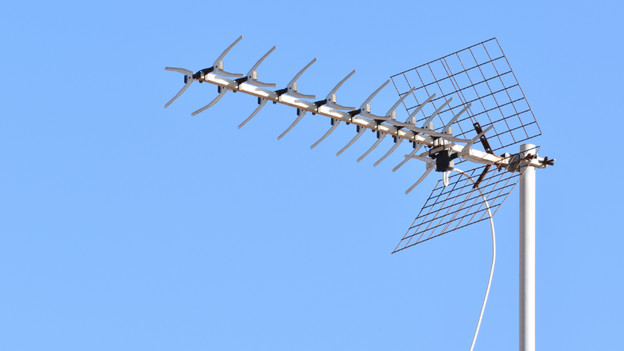
Antenna TV
With antenna television, you'll receive channels via a indoor or outdoor antenna. This type of television is also called DVB-T2. Most TVs have a built-in DVB-T2 receiver. Simply connect the antenna cable to your TV to get started.
The advantage of antenna television is that it's the most affordable way to watch TV. You can receive programs from public broadcasting channels in HD quality. If you prefer to watch your favorite series on commercial broadcasting channels like Pro7, you have to pay extra. For these extensions, your TV needs a CI/CI+ connector to receive commercial channels with a CI+ module. You can get this module from a TV provider of your choice.
Antenna TV generally has a more limited channel offer than digital or satellite TV, and not all channels are available everywhere in Germany. In conclusion, choose antenna TV if you don't want a lot of channels to choose from, and if you want to watch TV affordably.
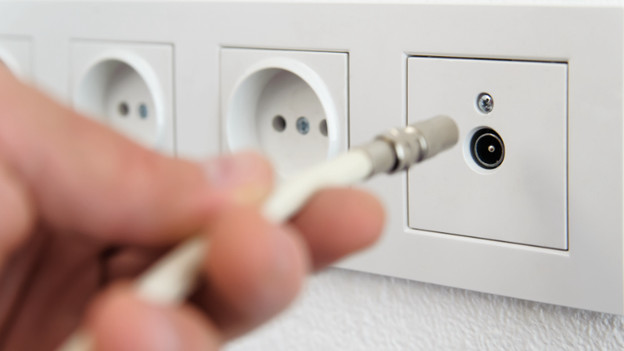
Cable TV
Cable TV is the second most common reception method in Germany. Most households have a connector for the cable in the wall. You can use that to connect a coaxial cable to the TV and scan for channels. Most flat screen TVs have a built-in DVB-C receiver for cable television.
For cable television, you need to have a subscription with a provider like Vodafone or Unity Media. This allows you to receive about 70 channels, some even in HD quality. Do you want to watch more channels in high quality? You can get a special module or receiver to unlock these for a fee. For a module, your TV has to have a CI/CI+ connector. You can connect an extra receiver via an HDMI connector.
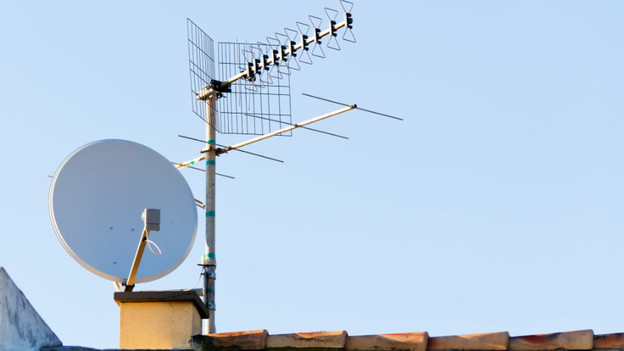
Satellite TV
Satellite TV is very common in Germany. That's because the satellite offers you the most channels with a strong signal. You'll have no bad image quality or interference. For this type of television, you need to have a satellite antenna on your roof. This can be expensive to purchase and install. That means you'll invest money and effort for a large offer of channels and high-end television enjoyment.
You can receive public broadcasting channels for free in HD via the satellite. Do you also want to enjoy commercial broadcasting channels in high definition? You can activate those with a CI module for a fee. Paid television like Sky Bundesliga is also available via satellite. Just like cable television, you can activate this via a CI/CI+ module or a satellite receiver. Your TV has to have a CI/CI+ or HDMI connector. Check the technical specifications at the bottom of our product pages to see which connectors your favorite model has.
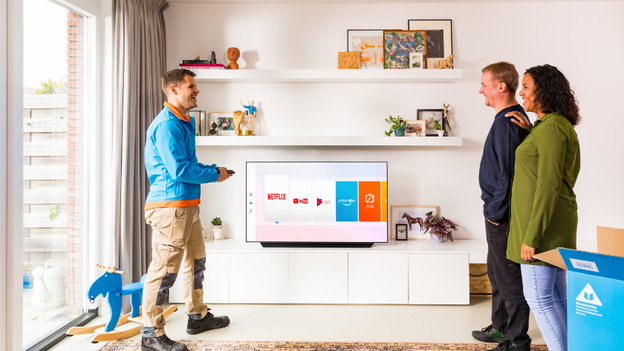
Television via the internet - IPTV
IPTV stands for Internet Protocol Television. You'll receive the same channels as via cable, antenna, or satellite, but they're transmitted via your internet connection. In Germany, the largest providers are Telekom with MagentaTV and Vodafone with GigaTV. The advantage is that their packages often contain traditional TV channels and streaming services like Netflix or DAZN. In addition, you can pause or rewind live TV. That's useful when the phone rings during your favorite talk show. The downside is that you have get your TV and internet from the same provider. That means the monthly rates are higher than for cable television, for example. It's also important to have a good and strong internet connection.
You can receive IPTV via a receiver that connects your TV to the internet or via a smart TV that can make a connection to the internet by themselves. In both cases, connect an internet cable from your router to your TV. This keeps the internet signal stable.
Conclusion
Most newer TVs have a built-in receiver that can receive traditional channels without extra hardware. For antenna TV, that's a DVB-T2 receiver, for cable it's DVB-C, and for satellite it's DVB-S. To be sure, you can check the technical specification on the page of the TV of your choice. You can find everything you need to know about the reception methods under "Functions - Use of CI+ module". If you prefer more luxurious IPTV or Netflix, choose a smart TV that can make an internet connection by itself. This way, you don't need to use cables and you can quickly switch between mobile phone, tablet, and the screen.
Article by Marlene
Television Expert.