Written by Steven
Edited on
11 August 2023
·
11:50
Do you choose a public display or TV for business use?
At the first glance, a public display and television seem identical. But there are differences. Many public displays have a touchscreen, which makes them ideal for presentations and brainstorm sessions. In addition, those screens can stay on for way longer without burning in. These are mainly used for narrowcasting. A TV is designed for shorter displays, like movies.
Public display or television
| Public Display | Television | |
|---|---|---|
| Intended for | Presentations, narrowcasting | Watch TV, movies, games |
| Burning hours per day | 12 to 24 hours | 0 to 12 hours |
| Touchscreen | Optional | Not possible |
| Starting price | High | Low |
Daily burning hours
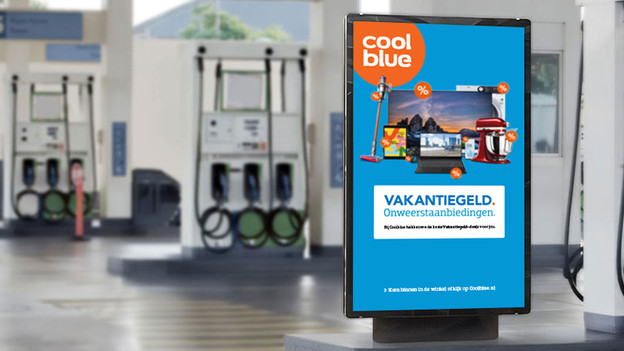
Public display: 12 to 24 burning hours per day
A public display, or large format display, is a professional screen that can stay on for 12 to 24 hours a day. These 24/7 screens are especially suitable for narrowcasting, which means communication with a small audience. Hang it on the wall to display your commercial throughout the day and night. It doesn't have to be a moving image, it can also be a logo or text. A public display burns in less quickly.
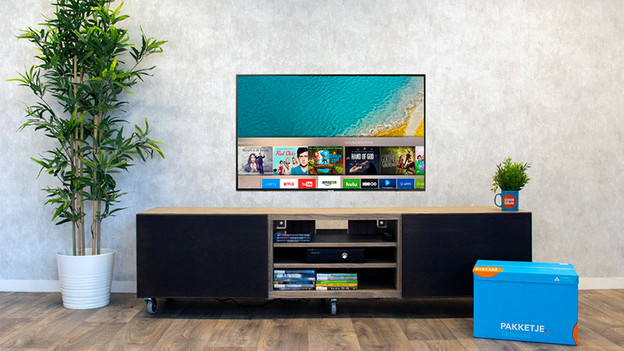
Television: 0 to 12 burning hours per day
Televisions are designed for 0 to 12 burning hours per day. That's because TVs are made for watching TV programs, movies, and sports games or to play games. Do you occasionally use the television for a presentation or to share a company film with colleagues? A television is a good choice. Do you use the TV the entire working day or even 12, 18, or 24 hours a day? This will significantly shorten the lifespan of the television and you'll have a large chance on a burn-in with many TVs.
Touchscreen
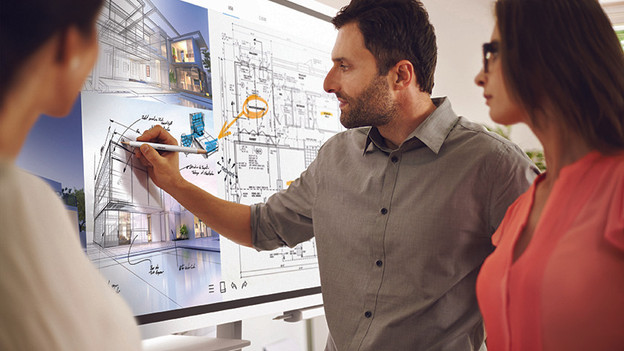
Public display: optional touchscreen
Some public displays have a touchscreen. This is useful during presentations, when you want to take notes, or want to emphasize something. Are you using the screen during a brainstorm session? You can easily draw out ideas. With the Samsung Flip 2, for example, you can even write on the screen with 4 people at the same time. You can also draw on existing images with different colors and brush types. Do you want to use the screen as an interactive information kiosk? In that case, touchscreen is also essential.
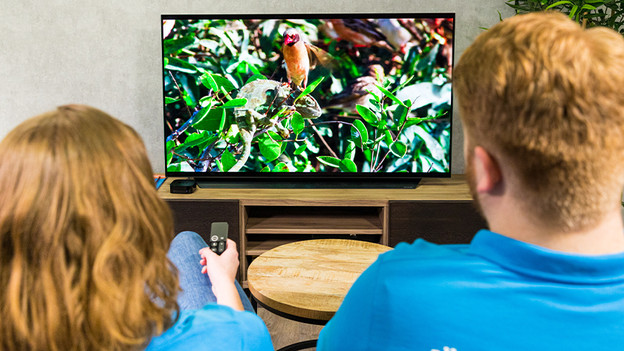
Television: no touchscreen
A television displays all your presentations and brainstorm documents, but doesn't have a touchscreen. Because of this, you have to take notes with pen and paper or a flip-over. Does little creative interaction take place in the workplace and do you mostly send information? A television is a good choice. For 2-way traffic and brainstorm sessions, a public display with touchscreen is a more suitable choice.
Conclusion
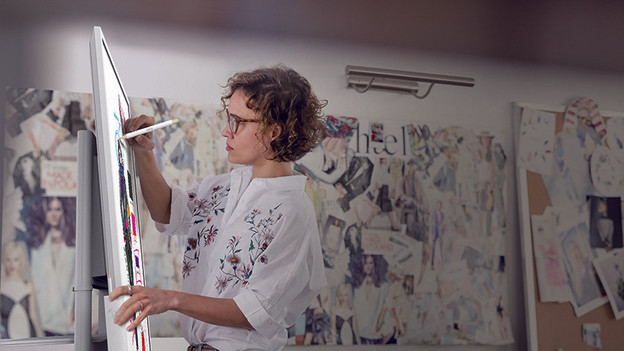
Public display: suitable for intensive business use
A public display is a large screen, meant for presentations, brainstorm sessions, and narrowcasting. A display like this can stay on for longer, doesn't burn in as fast, and sometimes has a touchscreen. This makes a public display specially suitable for advertisements and other business use.
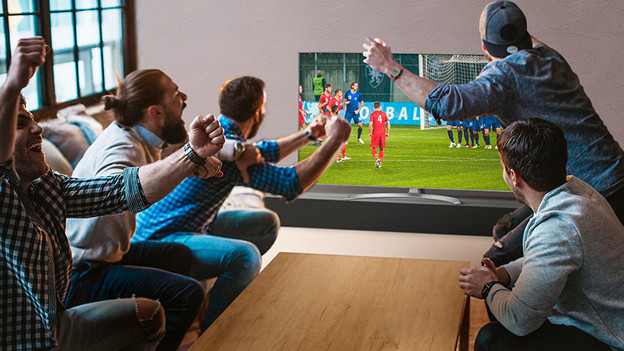
Television: less suitable for business use
A television is a large screen as well, but mainly designed to watch movies and series on at home. You can hang a television in the office if you don't use the screen often, for an occasional presentation, for example. But, a public display with touchscreen is more practical during a brainstorm session.
Article by Steven
Public Display Expert.