Mirrorless cameras

World Cup camera deals
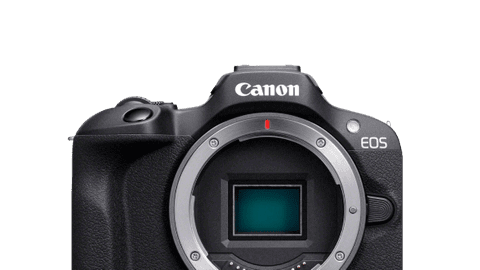
Mirrorless cameras for beginners
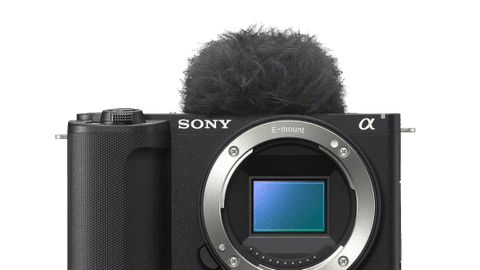
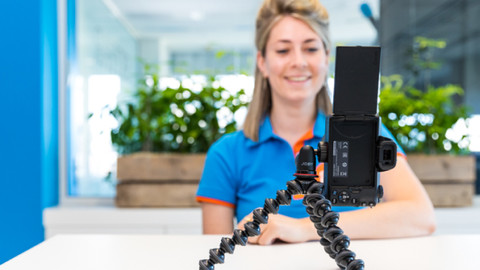
Mirrorless cameras for vlogging
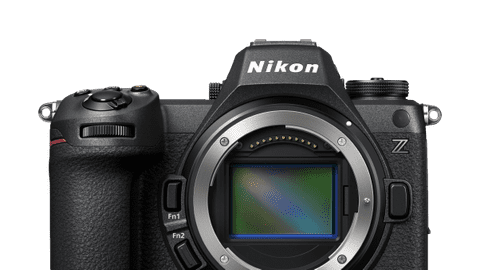
All mirrorless cameras
Also view these mirrorless cameras




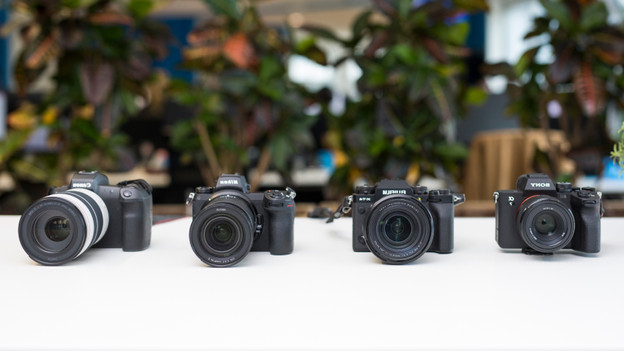
Everything on mirrorless cameras
During your search for a mirrorless camera, you find a lot of different brands and models. We're happy to help you choose. You can find all information on mirrorless cameras here. That way, you can get the best out of your camera.
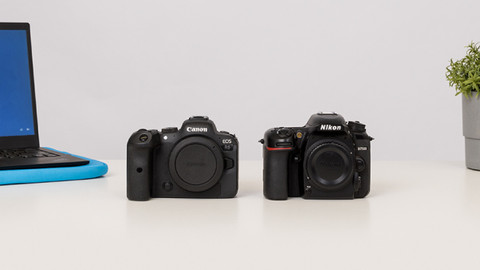
- Generally more compact and light than SLR cameras
- The latest technology in the field of photography
- With the digital viewfinder, you can see the result before capturing it
- Often has a worse battery life than SLR cameras due to the smaller battery
Type of image sensors

Full-frame sensors
- Captures the most light, so you see a lot of details in the dark.
- Creates the softest background blur, which is nice for portrait photos.
- Uses the full image angle of the lens, which you can use to capture landscapes.
- Is often in a higher price range than APS-C and Micro Four Thirds.

APS-C sensors
- Image is more zoomed in, so you can bring objects closer.
- Distortion in the corners of your image is less visible.
- Thanks to the smaller size, the camera is often more compact than a full-frame.
- Captures less light than a full-frame, so you often see fewer details in the dark.
Micro Four Thirds (MFT) sensors
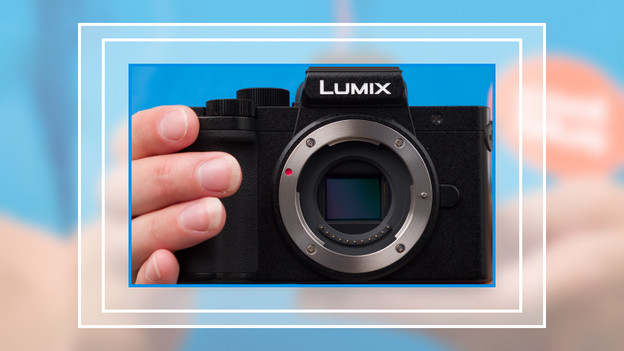
- Smallest sensor for mirrorless cameras, so there's more room for extra functions.
- The 4:3 aspect ratio is almost square, so you capture a lot vertically and horizontally.
- Many lenses for cameras with MFT sensors are compact, which is useful for travelling.
- Due to the small size of the sensor, it's the least suitable for dark situations.
Canon EOS R8
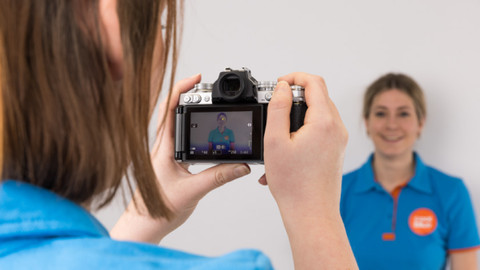
The Canon EOS R8 is a light camera with professional functions. That's why it's suitable for a city trip or for traveling. Ricardo will test this camera and tell you in this review what he thinks of it. He'll also show in the video what types of photos and videos you can take with it.
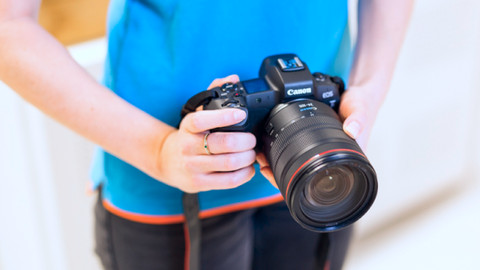
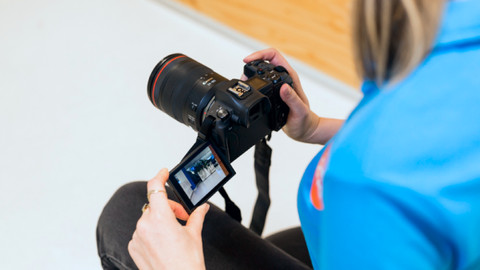
A professional mirrorless camera for every situation
Whether you create content for social media or prefer to capture nature: we have a suitable mirrorless camera for every situation.
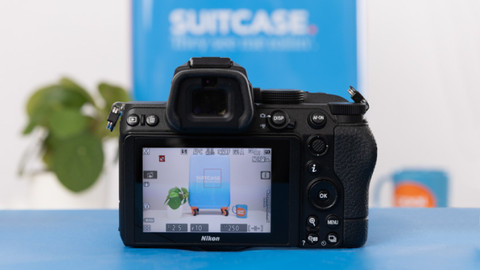
The Nikon Z6 III is a powerful all-round camera that is extra fast thanks to the semi-stacked full-frame image sensor. In JPEG, you can take 60 photos per second. You can film RAW images in 6K resolution, allowing you to edit them even more accurately.
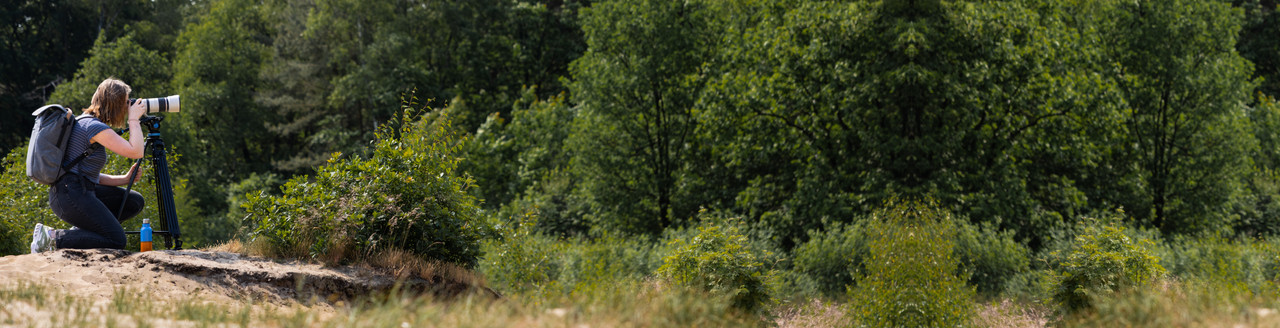
Capture nature with the Canon EOS R8. This camera is lightweight, so you can easily take it with you. With the large full-frame sensor, you can take sharp photos both during the day and in the evening. You can capture moving animals with 40 photos per second.
The Sony ZV-E1 is suitable for videographers, thanks to the advanced full-frame sensor. You can record high-quality videos that look clear and have many details. With the 5-stop image stabilization, you can record smooth handheld footage.
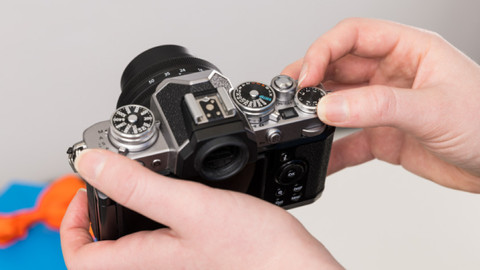
You can adjust the Fujifilm X-T5 to your liking with the programmable buttons. This ensures that you operate it fast. For example, you can capture a spontaneous event on the street right away. Thanks to the 40.2 megapixel sensor, your photos have a lot of details.


Lenses for different usage situations

Wide-angle lenses
Capture a wide landscape or tall architecture with the wide viewing angle. If you're close to your subject, the surroundings remain in the image.

Portrait lenses
Photograph portraits with the soft background blur of these lenses. You can also take clear photos in the dark thanks to the large aperture.

Telephoto lenses
With the large zoom range, you can bring faraway subjects closer without changing position yourself. Think of wild animals and athletes.
